Volume Conversion Tool

Cubic Feet to Cubic Yards Calculator

Convert cubic feet to cubic yards (and cu yd to cu ft) for concrete, gravel, mulch, topsoil, and sand — enter dimensions or cubic feet directly with instant, bid-ready results.

Quick answer

Divide cubic feet by 27 to get cubic yards, because 1 cu yd = 3 × 3 × 3 = 27 cu ft. Multiply cubic yards by 27 to go back.

Example: 540 cu ft ÷ 27 = 20 cu yd.

  • Instant conversion
  • L × W × D or cu ft
  • Mobile optimized
  • Truck load estimate

Volume Converter

Cubic feet → cubic yards · divide by 27

Why 27 cubic feet = 1 cubic yard

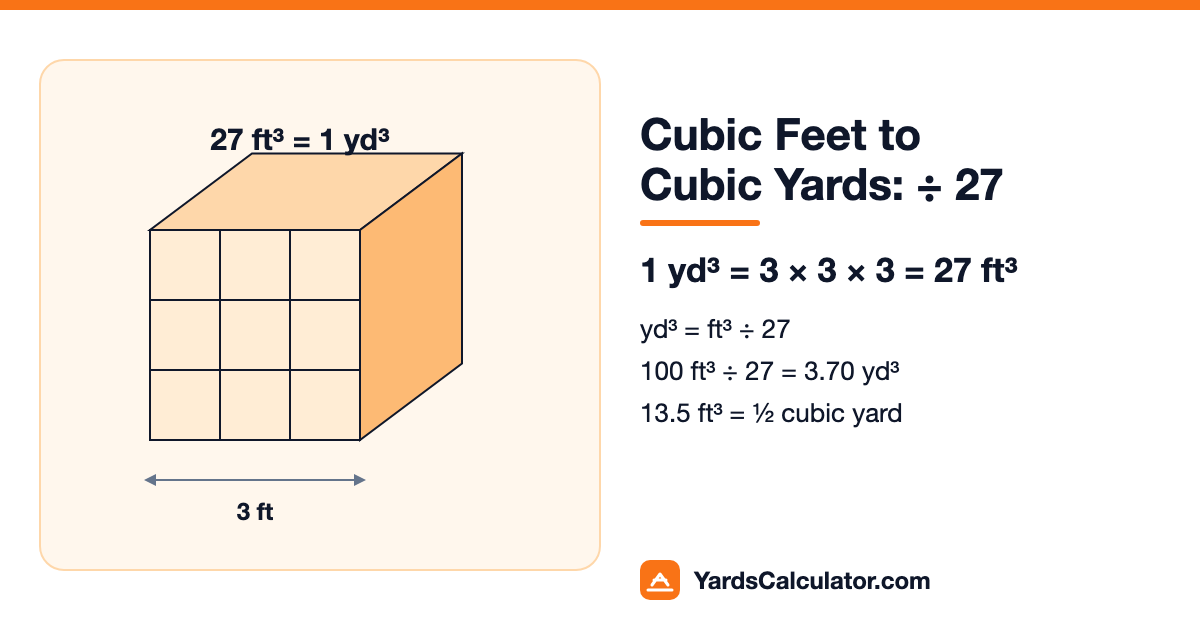
3 ft × 3 ft × 3 ft = 1 cu yd 100 ÷ 27 3.70 cu yd

Volume = length × width × depth (converted to feet)

Try cu ft:

You need approximately

Cubic Yards —
Cubic Feet—
Formula—

Typical ready-mix trucks hold ~10 cu yd per load. Use for planning — confirm with your plant.
Cubic Feet to Cubic Yards Formula

Cubic Yards = Cubic Feet ÷ 27

Reverse: Cubic Feet = Cubic Yards × 27.

Why 27?

One yard equals 3 feet. Volume uses cubic units: 3 × 3 × 3 = 27 cubic feet per cubic yard.

Step-by-step

  1. Find volume in cubic feet (length × width × depth, all in feet).
  2. Divide by 27 to get cubic yards.
  3. Round up for waste and minimum load requirements when ordering concrete or bulk materials.

Example: 100 cu ft ÷ 27 = 3.70 cubic yards. For full material estimates with waste and cost, use our cubic yard calculator or concrete calculator.

How Many Cubic Feet in a Cubic Yard?

There are 27 cubic feet in one cubic yard. A cubic yard is a cube 3 ft long, 3 ft wide, and 3 ft high, and 3 × 3 × 3 = 27. That is why you divide cubic feet by 27 to get cubic yards.

  • 100 cu ft ÷ 27 = 3.70 cu yd
  • 13.5 cu ft = half a cubic yard
  • A 2 cu ft bag of mulch is 0.074 cu yd, so about 13.5 bags make one cubic yard.

Converting the other way? See cubic yards to cubic feet (multiply by 27).

Cubic Feet to Cubic Yards Chart

Cubic feet to cubic yards reference for dispatch and bulk orders.

Cubic feetCubic yards
1 cu ft0.037 cu yd
2 cu ft0.074 cu yd
5 cu ft0.185 cu yd
10 cu ft0.37 cu yd
13.5 cu ft0.5 cu yd
20 cu ft0.741 cu yd
27 cu ft1 cu yd
50 cu ft1.85 cu yd
54 cu ft2 cu yd
81 cu ft3 cu yd
100 cu ft3.7 cu yd
108 cu ft4 cu yd
135 cu ft5 cu yd
150 cu ft5.56 cu yd
200 cu ft7.41 cu yd
270 cu ft10 cu yd
300 cu ft11.11 cu yd
400 cu ft14.81 cu yd
500 cu ft18.52 cu yd
1,000 cu ft37.04 cu yd

When to Use This Converter

Concrete: Plans or pump charts may list cubic feet; ready-mix plants quote and dispatch in cubic yards — pair with concrete volume calculator for slab takeoffs.

Gravel & aggregate: Convert pit or stockpile measurements before using the gravel calculator for tons and depth.

Mulch & topsoil: Bed volumes in cubic feet convert to cubic yards for blower-truck or bulk delivery via mulch and topsoil calculators.

Sand & fill: Trench and backfill checks — see sand calculator for final order quantities with compaction.

Diagram of a 3 × 3 × 3 ft cube showing 27 cubic feet in one cubic yard
One cubic yard is a 3 ft cube: 27 cubic feet.

Cubic Feet to Cubic Yards FAQ

How many cubic yards is 100 cubic feet?

100 cubic feet is about 3.70 cubic yards, because 100 ÷ 27 = 3.70.

How many cubic feet are in a cubic yard?

There are 27 cubic feet in one cubic yard (3 ft × 3 ft × 3 ft).

Why divide by 27?

Volume scales with the cube of the linear conversion. Since 1 yard = 3 feet, 1 cu yd = 3³ = 27 cu ft.

How do I calculate cubic yards?

Multiply length × width × depth in feet to get cubic feet, then divide by 27. Or enter cubic feet directly on this page.

What is a cubic yard used for?

Suppliers price and deliver concrete, gravel, mulch, topsoil, sand, and fill dirt in cubic yards across North America.

How do I convert cubic yards to cubic feet?

Multiply cubic yards by 27. Use the Cu Yd → Cu Ft tab for reverse conversion.

How we built this calculator: results use the standard volume, area, and coverage formulas shown on this page, with typical U.S. material densities, bag yields, and waste factors that you can override. Written and checked by the YardsCalculator editorial team. Last reviewed: October 2026.